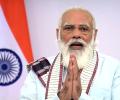
The main purpose of the meeting is to assess their views on reforms that are required to attract long-term capital into the country.

Vodafone Idea (Vi) is working on a fresh business plan that could alter its funding requirements. Addressing shareholder queries at the company's annual general meeting (AGM) on Wednesday, Vi chairman Himanshu Kapania said the exact amount will be worked out upon submission of a new business plan. "The management is working on a new business plan and will come to the board with the funding requirements," Kapania told shareholders in his first AGM as chairman.

The scheme is the biggest fiscal component of the Rs 20-lakh crore Aatmanirbhar Bharat Abhiyan package announced by Finance Minister Nirmala Sitharaman last month.

Titan was the top loser in the Sensex pack, shedding over 1 per cent, followed by TCS, HCL Tech, Reliance Industries, UltraTech Cement and Bharti Airtel. NSE Nifty settled 45.65 points down at 15,814.70.
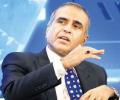
Telecom operator Bharti Airtel Chairman Sunil Mittal on Wednesday said the telecom sector reforms approved by the Cabinet will ensure that the industry is able to invest fearlessly, and the company will respond to Prime Minister Narendra Modi's call to invest and accelerate the country's growth. Among a series of breathers for the stressed telecom sector, the Cabinet has approved the inclusion of revenues earned only from telecom services in the adjusted gross revenue (AGR), and the removal of penalty on dues to be paid to the government prospectively. Mittal congratulated and thanked the government for undertaking these seminal reforms to lift an industry that is at the core of his Digital India vision.

Finance Minister Nirmala Sitharaman had in May announced that there will be a maximum of four public sector companies in strategic sectors, and state-owned firms in other segments will eventually be privatised.
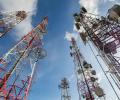
The government expects to realise Rs 35,100 crore from the partial sale of Bharatnet fibre assets and around 13,500 mobile towers owned by state-run telecom firms as part of its national monetisation pipeline released on Monday. Government think tank Niti Aayog has valued over 2.86 lakh kilometre of optical fibre assets laid by BBNL and BSNL under rural broadband project Bharatnet at Rs 26,300 crore, according to the National Monetisation Pipeline (NMP) document. According to the document, BSNL's 13,567 mobile tower assets and MTNL's 1,350 towers have been valued at Rs 8,800 crore.

Apple's newest phone iPhone 14 will be made in India as the global tech titan bets big on the manufacturing prowess of the world's second-biggest smartphone market after China.

Sitharaman said the government wants to sell stake in public sector companies at a time when it fetches the right price.

Prime Minister Boris Johnson said the UK will hit Russia with a "first barrage' of economic sanctions, warning that President Vladimir Putin is fixed on a "full-scale invasion of Ukraine".

India's sourcing from China may not necessarily be for cost-effectiveness alone but also for the lack of domestic qualified bidders, technology or other know-how.

RSS-aligned Bharatiya Mazdoor Sangh (BMS) on Monday expressed disappointment over the government's budget proposals with regard to divestment and foreign direct investment, especially in the insurance sector. The BMS, however, lauded the government for its current efforts on the massive vaccination programme, a special scheme for tea workers in West Bengal and Assam, labour oriented push on infrastructure projects in construction sector and development of five major fishing harbours viz. Kochi, Chennai, Visakhapatnam, Paradip, and Petuaghat as hubs for economic activities etc. On other Budget proposals, it said in a statement that "mixing the beautiful concept of Aatmanirbhar Bharat with FDI and disinvestment in the Union Budget is disappointing for the employees".

Higher prices are burdening household budgets and threatening the margins of leading manufacturers.

'It is not simply demonetisation or GST, it is this government's failure to manage the financial sector crisis.'

Government may also consider giving relief to some of the worst-affected sectors.

At a combined level, the fiscal deficit of the Centre and states together will come at 12.1 per cent, with the states contributing 4.5 per cent.

This year's share of dream and super-dream job offers has spiked. As a result, the overall annual average salary packages have nearly doubled at some of these college campuses.

Government think tank Niti Aayog has suggested 100 per cent income tax exemption for donations and provision of working capital loans with lower interest rates for not-for-profit hospitals to strengthen healthcare services in India. In a report titled 'Not-for-Profit Hospital Model in India', the Aayog also pitched for involving high performing hospitals in public private partnership (PPP) models for managing primary health care (PHCs), operations of government facilities and PSU hospitals. "Income-tax exemption could be increased from the current 50 per cent exemption to 100 per cent exemption for philanthropy toward the identified not-for-profit hospitals.

The status of the current submarine force level is alarming and we need to address the threat perceptions expeditiously. Critical decisions pertaining to national security cannot be delayed any further due to the rapidly changing maritime threat perceptions and growing strategic importance of the Indian Ocean region, asserts Commodore Venugopal Menon (retd).

'The Ruble is now down 50 per cent and worth less than one American penny since Putin announced his war'

If we basically expect the government to use taxpayers' money to intervene every time when there are some 'sunsets,' then I think you introduce possible moral hazards: Subramanian.

Hindustan Unilever (HUL) hiked prices across its portfolio of products by 3-13 per cent in multiple tranches in February, with the sharpest increase of 13 per cent seen in the 100 gm Lux soap pack, the price of which increased to Rs 35 from Rs 31 earlier. The price of the 125 gms soap pack of Lifebuoy was hiked from Rs 31 to Rs 33, a rise of 6.5 per cent. In January, the company had hiked the price of the same stock-keeping unit from Rs 29 to Rs 31.

Unlike the earlier experience post the global financial crisis, where nearly 90 per cent of the restructuring happened in the corporate loans, the non-corporate segment, which includes small businesses, agricultural loans and retail lending, will account for a higher share this time.

HR experts estimate that up to 70 per cent companies in the manufacturing and services space including sectors like auto components, edutech and construction equipment are looking to restore the salary cuts over the next couple of months.

The government has no plan to print currency notes to tide over the current economic crisis triggered by the outbreak of COVID-19 pandemic, Finance Minister Nirmala Sitharaman informed Parliament on Monday. To a question on whether there is any plan to print currency to tide over the crisis, the finance minister said, "No Sir". Many economists and experts have suggested to the government to print more currency notes to tide over the difficult economic situation with a view to support the economy ravaged by the spread of COVID-19, and protect jobs.

Accusing the Centre of setting a new trend of playing "dirty politics" for votes through the budget, an editorial in Sena mouthpiece 'Saamana' said the allocation of more funds to poll-bound states is a kind of "bribery".

After Vodafone Idea, Tata Teleservices (Maharashtra) on Tuesday said it will opt for conversion of the interest amount on AGR dues into equity and post conversion, the government's holding in the company is expected to be around 9.5 per cent. The announcement of Tata Teleservices (Maharashtra) came within hours of Voda Idea also deciding to opt for converting the interest amount on AGR dues into government equity. In a filing to the BSE, Tata Teleservices (Maharashtra) said Net Present Value or NPV of interest is expected to be nearly Rs 850 crore as per the company's estimates, subject to confirmation by the Department of Telecom (DoT).

Hiring for management professionals with greater than 16 years of experience witnessed a spike of 66% compared to last year.
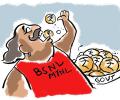
The Centre is considering relaxing some norms that led to the failure in attracting bids for assets of Bharat Sanchar Nigam (BSNL) and Mahanagar Telephone Nigam (MTNL) as they look to restart the auction for their non-core assets. The Department of Investment and Public Asset Management (DIPAM) had listed six properties of BSNL and MTNL for sale through its new e-bidding portal, developed by state-run MSTC, but the auction failed to garner an adequate interest. DIPAM had asked government-appointed property consultants to identify issues in the bidding criteria for resolution.

The auction for the 5G spectrum is likely to take place around April-May next year, Communications Minister Ashwini Vaishnaw said on Thursday. While relief measures announced in September this year for telecom operators marked the first set of reforms, the government will bring out a series of further reforms and "telecom regulatory structure should change in coming 2-3 years", Vaishnaw said. Speaking at the 'Times Now Summit 2021', the minister said India's telecom sector regulation has to be benchmarked with the global best, and added that "so, we will come with a series of reforms in this, such that the global benchmark of regulations is achieved in India".

Seven students were made international offers.

The government on Thursday said it has extended the Emergency Credit Line Guarantee Scheme (ECLGS) to the health sector and 26 other sectors identified by the Kamath Committee. The National Credit Guarantee Trustee Company Limited (NCGTC) has issued the operational guidelines for implementation of ECLGS 2.0 scheme, the finance ministry said in a statement. The scheme was announced by the government earlier this month as part of the Rs 2.65 lakh crore Atmanirbhar Bharat 3.0 package.

As many as 15 companies, including Adani Copper Tubes, LG Electronics and Wipro Enterprises, with committed investment of Rs 1,368 crore, have been selected as beneficiaries under the PLI scheme for the white goods sector, the government said on Tuesday. In March, the commerce and industry ministry had reopened the application window for its Rs 6,238-crore PLI scheme for white goods -- air-conditioners (ACs) and LED lights-- with an aim to accommodate more players as several firms had expressed interest in the initiative. Last year, as many as 46 firms, including Daikin, Panasonic, Syska and Havells, with committed investment of Rs 5,264 crore were selected in the first round the scheme.

IITs anticipate COVID-19 restrictions to impact international offers being extended by global recruiters.

Trai's regulatory intervention was supposed to stimulate the market, but the latest order seems quite on the contrary, asks Nivedita Mookerji.

Vice-Chairman Arvind Panagariya said that India is facing a health crisis that has led to a sudden stop of the economy.

Stating that COVID-19 has not yet been contained in India, the rating agency in a statement said the government stimulus package is low relative to countries with similar economic impacts from the pandemic. "The COVID-19 outbreak in India and two months of lockdown -- longer in some areas -- have led to a sudden stop in the economy. That means growth will contract sharply this fiscal year (April 2020 to March 2021)," it said. "Economic activity will face ongoing disruption over the next year as the country transitions to a post-COVID-19 world."

Indicators show green shoots in the economy with electricity and fuel consumption, inter and intra-state movement of goods, PMI data and retail financial transactions witnessing a pick-up, she said.
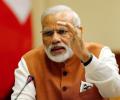
India is investing in developing indigenous capabilities in 5G and 6G telecom technologies besides focusing on manufacturing semi-conductors, Prime Minister Narendra Modi said on Thursday. In a virtual address at the Sydney Dialogue, the prime minister said the "greatest product" of technology today is data and that India has created a robust framework of data protection, privacy and security. "And, at the same time, we use data as a source of empowerment of people. India has unmatched experience in doing this in a democratic framework with strong guarantees of individual rights," he said.

Foreign Direct Investment flows to India in 2021 were 26 per cent lower, mainly because large M&A deals recorded in 2020 were not repeated, the UN trade body has said.
